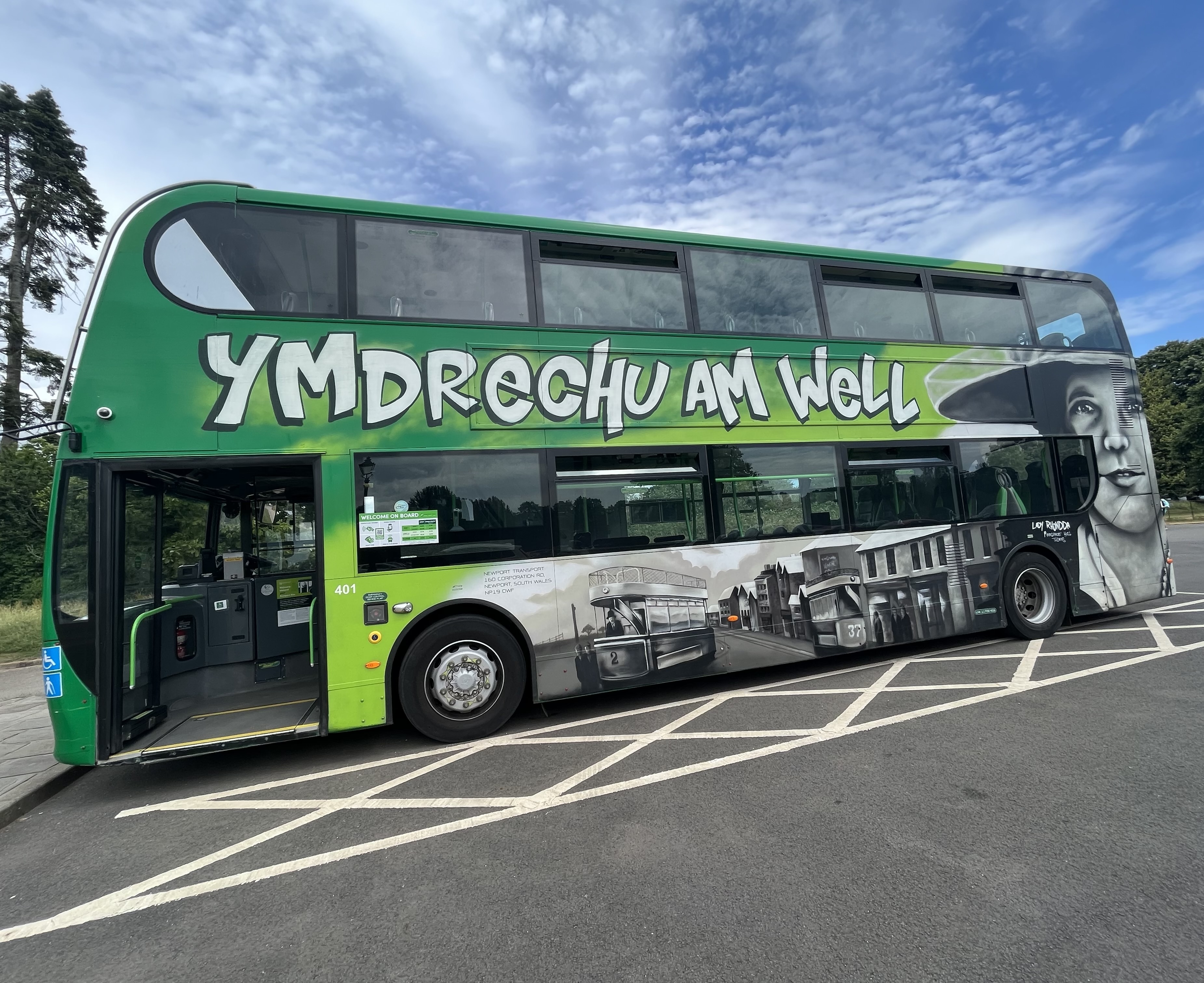
Discover the History of Lady Rhondda
3 years ago
Ever wondered who the lady behind our Newport Transport Graffiti bus was? Raised in LLanwern 1883, Lady Rhondda was a suffragette who made the fight for the vote front page news, by jumping on the anti-suffrage Prime Minister Asquith’s car, setting fire to post-boxes and partaking in a hunger strike in prison.

Lady Rhondda sat on the board of 33 companies, chairing 7 of them, and oversaw an industrial empire of mines, shipping, and newspapers. She was also the first and to date, the only female to be president of the Institute of Directors. She was also a journalist, creating and editing ground-breaking and hugely influential weekly papers. ‘Time and Tide’ featured someone of the literary giants of the 20th century- from George Orwell to JRR Tolkin. The paper that had a “ground-breaking all female board” but appealed to both men and women, explored Welsh, British and International politics, as well as the arts. This paper was prevalent in pushing Lady Rhondda’s Six Point Group- which made gender equality paramount.
Furthermore, during the First World War, Lady Rhondda ensured women played a vital role- recruiting them into the women’s services. This led her to become Commissioner for Wales in the Women’s National Service Department, then Chief Controller of women’s recruitment at the Ministry of National Service in London. Amongst all of this, Lady Rhondda crossed the Atlantic where she survived the sinking of the Lusitania when it was torpedoed during the war, claiming more than 1000 lives. Lady Rhondda stated that this experience “altered my opinion of myself. I had lacked self-confidence… and here I had got through this test without disgracing myself. I had found that when the moment came, I could control my fear.” After this terrible experience, Lady Rhondda continued the fight for the final phase of women’s suffrage which saw all women get the vote in 1928.
Lady Rhondda, Margaret Haig Thomas is the very reason why women of today can sit in the House of Lords. After campaigning for her female peers for 40 years, the law was finally overturned. Sadly, she died before she was able to take her own seat, without knowing that her resilience paid off.
Now buried in Llanwern- where she was raised, Lady Rhondda remains one of the most monumental and remarkable figures Wales has/will ever know. Now when passing the Lady Rhondda Mural in Shaftsbury, or boarding our graffiti bus, Lady Rhondda can receive the gratitude and praise from both women and men in Newport. You can visit Llanwern with our DRT service, and hop on board the 1 Newport Bus service to visit Risca road. Plan your journey here.